Longform
Week note - iii
I love baked ziti. Growing up in Connecticut every event called for a baked ziti. It is the east coast equivalent of the midwestern hot dish. Your neighbors invited you to a backyard barbecue? You can count on a tinfoil tray of ziti next to the burgers. Going to a pot-luck with your coworkers? Phil from accounting got that zeet.[^1] Italian-American food is my comfort food and ziti is, among them, uniquely nostalgic for me. It is simple to make and beloved by almost everyone.
Over the past few weeks my partner has been making lasagnas for Lasagna Love, a program where folks volunteer to (as you might imagine) make a lasagna for a neighbor in need. Consequently, I’ve spent a lot of time hovering around the kitchen as she makes delicious found I can’t have. This sparked a conversation about our shared love for baked ziti. Meaghan grew up on Long Island immersed in the same cultural ziti-geist in her childhood.
Driven by nostalgia we decided to make each other a baked ziti, inspired by our experiences back home. She made hers last week and it was fantastic, just what I’d expect from a chef’s daughter. As I write this, my own ziti is baking in the oven. I tried to recreate it the way that my mom made her’s when I was growing up. She was a single parent with limited income and two boys who ate staggering amounts of food, so cheap and simple meals that made a large quantity were a staple in house.
My mom’s approach didn’t have a recipe from grandma or begin with hours prepping a sauce from scratch. Most of the time it started with a jarred sauce she’d zhuzh up with ground beef (or whatever was on sale), pinches of dried spices from the cabinet, and some sautéd garlic & onions. A typical Sunday meant cooking up a huge pot of sauce, and rolling meatballs, eventually assembling a baked ziti and a pile of spaghetti that my brother and I would eat for the rest of the week.[^2]
Sometimes it’s nice to have a taste of the past.
Next week my partner and I start our roadtrip. For the last three years now, at the end of the summer we pack up my old Japanese van and make our way south down to the Sierras. We camp, backpack and stop wherever calls to us and it’s one of my favorite trips each year.
Week note - ii
I flew to Minneapolis for a wedding this weekend and only got back home to Portland last night, so this post is a bit delayed.
This was my first time experiencing Minneapolis and we stayed just a few blocks away from the site of Alex Pretti’s murder. It’s hard to put into words how I feel about what was done to him and the terror that has been inflicted upon the community by the state.
Alex was a nurse whose life focused on helping others. Alex was murdered for doing something righteous. As the horrors continue to build up around us, threatening to extinguish in us the voice that compels us to do what we know to be righteous, it is important that we don’t give into the despair. We owe it to Alex and so many others to continue the work.
"We live in capitalism. Its power seems inescapable. So did the divine right of kings. Any human power can be resisted and changed by human beings." - Ursula K. Le Guin, National Book Awards speech, 2014
The wedding was beautiful.
Week note - i
This past weekend was my birthday. My partner and I celebrated by camping at Cape Lookout on the Oregon coast. We had dinner at Willy’s in Oceanside. Run by a husband and wife team they serve Japanese comfort food in a beach town nestled on a cliffside.
The Oregon coast is a special place for me. It feels otherworldly. It is one of my most unexpected pleasures I discovered since moving to the state. Wide, often empty beaches, shrouds of mists crawling over groves of pine. The chance at glimpses of sea lions or even whales.
My favorite moment was our sunset campfire on the beach. When the sun finally fell beneath the horizon the distant dots of other camp fires were the only indication you weren’t utterly alone in the emptiness.
On finding purpose in customer support
I wrote this post as my submission to the August edition of the IndieWeb Carnival, which each month invites folks to write something on their blog based on a topic proposed by a rotating host. August’s carnival topic is “purpose” and the host is Chris Shaw. I am also double dipping and counting this as my first post of Blaugust 2026 - a community celebration of blogging.
For the last 15 years or so my job[^1] has been (more or less) to think about and build the mechanisms to deliver customer support for companies who (more or less) make software on the internet that (more or less) helps other businesses do something more efficiently. In that time I’ve said a lot of things about what the purpose of that labor is. Support as the face of your product. Support as your connection to your customer’s needs. Support as a viable, valuable and under-appreciated career. My understanding of the purpose of the work has shifted and grown alongside me.
The latest evolution of this opinion has less to do with changes in my own view of the work and more to do with changes in the macroeconomic landscape. While the death of support has been confidently decried many times in the past, I believe a time of transformation is really at hand - even if there is life still in the profession. I’m certainly not the first to say that AI - and more precisely LLMs - are dramatically changing both the support customers receive and the daily lives of the people giving it. At no time in the past has it been so easy for a company to give somewhat acceptable answers at such low costs and, debatably, quality.
Summer slows and trips do to
Earlier this month my partner and I were in the thick of preparing for our annual summer adventure. We were fixed on a road trip in our ancient Japanese van (Vancent) that’d take us from Portland, OR out to Whitefish, Montana. We planned to start with three days of bikepacking through the outer edges of Glacier National Park. Afterward, we’d booked camp sites in the park we’d pass the days hiking the best trails of Glacier before heading back home. I’ve never been to Glacier National Park or even Montana and this felt like a perfect introduction.
But then it started raining. And we started worrying. Both of us have adventured in the rain before. In fact, I don’t think I actually saw Mt. Blanc during our entire trip around it, covered in clouds and falling rain as it was. But then it got worse. Bad enough to close sections of the park and put my glacial dreams to pasture. Left with only a few days before our intended start we pivoted into planning mode. Our goal? Drive somewhere that would be warm, dry and have plenty to do outside.
A love letter to bicycles
“Get a bicycle. You will not regret it, if you live.” Mark Twain, Taming the Bicycle
Bicycles are tools for joy
Riding a bike is like flying. I shift my center of gravity and the bike beneath me responds, changing trajectory. I imagine I am like a bird. I am adjusting my wings to cup a rising thermal, effortlessly carried upwards. On my feet I am not graceful. I have been accused many times of being clumsy. Off-kilter. You wouldn’t pick me first for your beer league kickball team and you’d be right for doing so. (It’s ok.) When I am riding my bike, though, I feel like I can taste what it means to be graceful.
“I began to feel that myself plus the bicycle equaled myself plus the world, upon whose spinning-wheel we must all learn to ride, or fall into the sluiceways of oblivion and despair. That which made me succeed with the bicycle was precisely what had gained me a measure of success in life: it was the hardihood of spirit that led me to begin, the persistence of will that held me to my task, and the patience that was willing to begin again when the last stroke had failed.” Frances E. Willard, A Wheel Within a Wheel: How I Learned to Ride the Bicycle, with Some Reflections by the Way
I wouldn’t say I am a great cyclist. I can’t do a wheelie as much as I try. You won’t catch me zipping coolly down a mountain bike course either. But in my years of biking I’ve built up a trust in my body that I haven’t found anywhere else. Can I climb this hill and go another 40 miles? Slowly and out of breath, but definitely. More times than I can count, I’ve found myself barreling towards disaster only for my body to take control. Unconsciously driven, a palm shifts my bars to the left, and my core stretches out, weight lifting off the seat – transforming my reckless bombing down a rocky trail on a loaded touring bike from a prelude to the hospital into a controlled dance. I hurtle over rocks and around holes my mind hasn’t had a chance to process.
Bicycles are tools for freedom
“It is by riding a bicycle that you learn the contours of a country best, since you have to sweat up the hills and can coast down them. Thus you remember them as they actually are, while in a motorcar only a high hill impresses you, and you have no such accurate remembrance of country you have driven through as you gain by riding a bicycle.” Ernest Hemingway, dispatch in Collier’s, September 30, 1944
I love bikes. I’d been smitten with them for years, but I remember the very day I fell in love. It was an autumn day and the afternoon was warm when I descended from the trees of Forest Park into the rolling farms of the Willamette Valley west of Portland. I pulled my new bike over to the shoulder of the road and looked around, unabashedly beaming. I rode myself here. I took my bike out the front door of my house and under my own power climbed up the winding trails of Forest Park and out into the valley beyond the city. I had never taken myself so far before. I still had miles to go but I was buzzing with the joy of it. The joy of my own freedom.
Bicycles are tools for solidarity
I don’t think it is a controversial statement to say that cycling advocacy has a loud and engaged population of white men. As a white man, I can’t help but think this might be in part because riding a bike is often the first time folks like me have encountered structural inequities first hand. The experience can be especially jarring for those who’ve grown up reaping the benefits of male and white privilege.
Being on a bike engenders a sense of personal freedom. At the same time riding a bicycle in America places you squarely in a world that does not prioritize your safety. You’ll encounter infrastructure that serves to protect people in multi-ton machines and dismisses the danger faced by bike riders. It’s not hard to find people who reject bicycles as equal users of the road (check the Portland subreddit if you haven’t had the pleasure of meeting these people.) Worse, it is sadly common to pin the blame on cyclists murdered by cars, even when the driver has been grossly negligent. One study in America shows that only 12% of drivers face criminal penalties when their actions resulted in the death of a cyclist. (League of American Bicyclists, 2012)
It isn’t inherently bad that bicycles are an entry point for many white men into the world of injustices, but it is critical that they use that experience to build allyship with broader communities who face discrimination and the movements to right these injustices. The lens of being a cyclist can be a gateway that makes it easier to understand the needs of others who face different discrimination in mobility or transportation access and to rally individuals to use their privilege to provide support for their causes. (Interested in this? Check out Bicycle/Race: Transportation, Culture & Resistance by Adonia E. Lugo, PhD)
Bicycles have long had a place in resistance and equal rights movements. There is a rich and powerful history of bicycles in women’s liberation. I couldn’t begin to capture the depth of this in my love letter, but I recommend Revolutions by Hannah Ross or Portland-local Elly Blue’s Bikenomics as great places to start learning.
Bicycles have a power that builds intersectionality. They’ve been tools in the struggle for Black liberation. (See Kittie Knox) They’ve been tools to support resistance across the globe. (As seen in Mexico) They’ve been a pathway for allies and supporters to protect groups pushing to be heard in protests and movements. (Thank your corker.)
“Let me tell you what I think of bicycling. I think it has done more to emancipate women than anything else in the world. I stand and rejoice every time I see a woman ride by on a wheel. It gives a woman a feeling of freedom and self-reliance. It makes her feel as if she were independent… the picture of free, untrammelled womanhood.” Susan B. Anthony, interview with Nellie Bly, “Champion of Her Sex,” New York World, February 2, 1896
Bicycles are tools for love
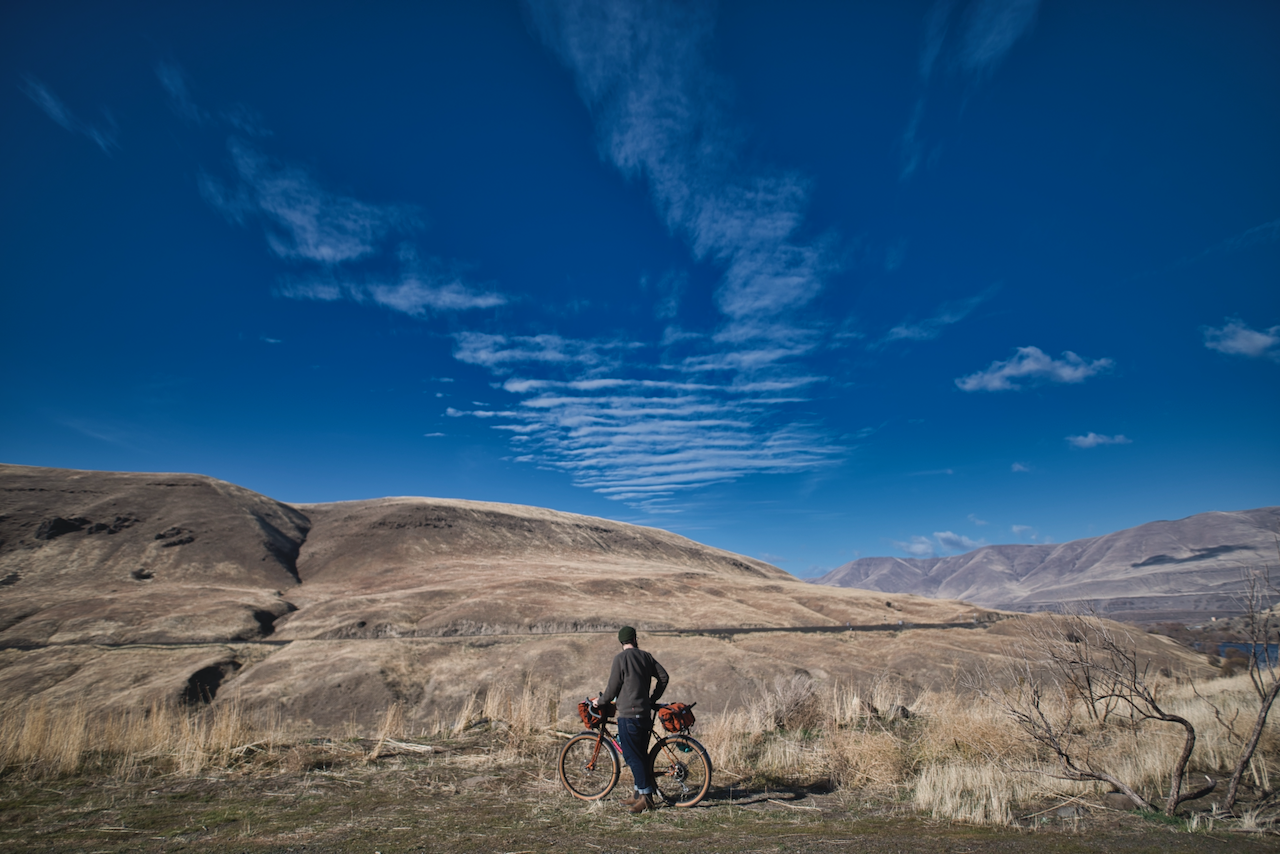
I love my bike and the many bikes I’ve had. I love the many people I’ve met through bicycling—people I’d never have crossed paths with otherwise. I love the person I’ve become because of it. I love riding to meet my friends for dinner and I love riding across the eastern Oregon high desert.
I hope that you too might love bikes.
“My favorite thing to do is ride a bicycle. I ride road bikes. And for me, it’s mobile meditation.” Robin Williams, Reddit “Ask Me Anything” session, September 25, 2013